

2022-08-17
In modern construction projects, clients rarely purchase a single product. Instead, they often source multiple systems together, such as aluminum windows & doors, railing systems, and louvers.
Mixed container loading is one of the most effective ways to reduce shipping costs in construction material projects.
However, shipping these products separately often leads to higher logistics costs, longer delivery cycles, and more complex coordination.
This is why mixed container loading has become an increasingly important solution for international projects.
Mixed container loading refers to combining multiple product systems into a single container through strategic planning.
It is not random mixing, but a structured and optimized loading method.
Shipping multiple products in one full container can significantly reduce logistics expenses.
Reduce freight costs by 15–35%
Minimize handling charges
Optimize container utilization
The higher the loading efficiency, the lower the cost per unit.
When all materials such as windows, railings, and louvers arrive together, installation teams can start work immediately without waiting for additional shipments.
This reduces idle time on-site, improves workflow, and helps contractors maintain project schedules.
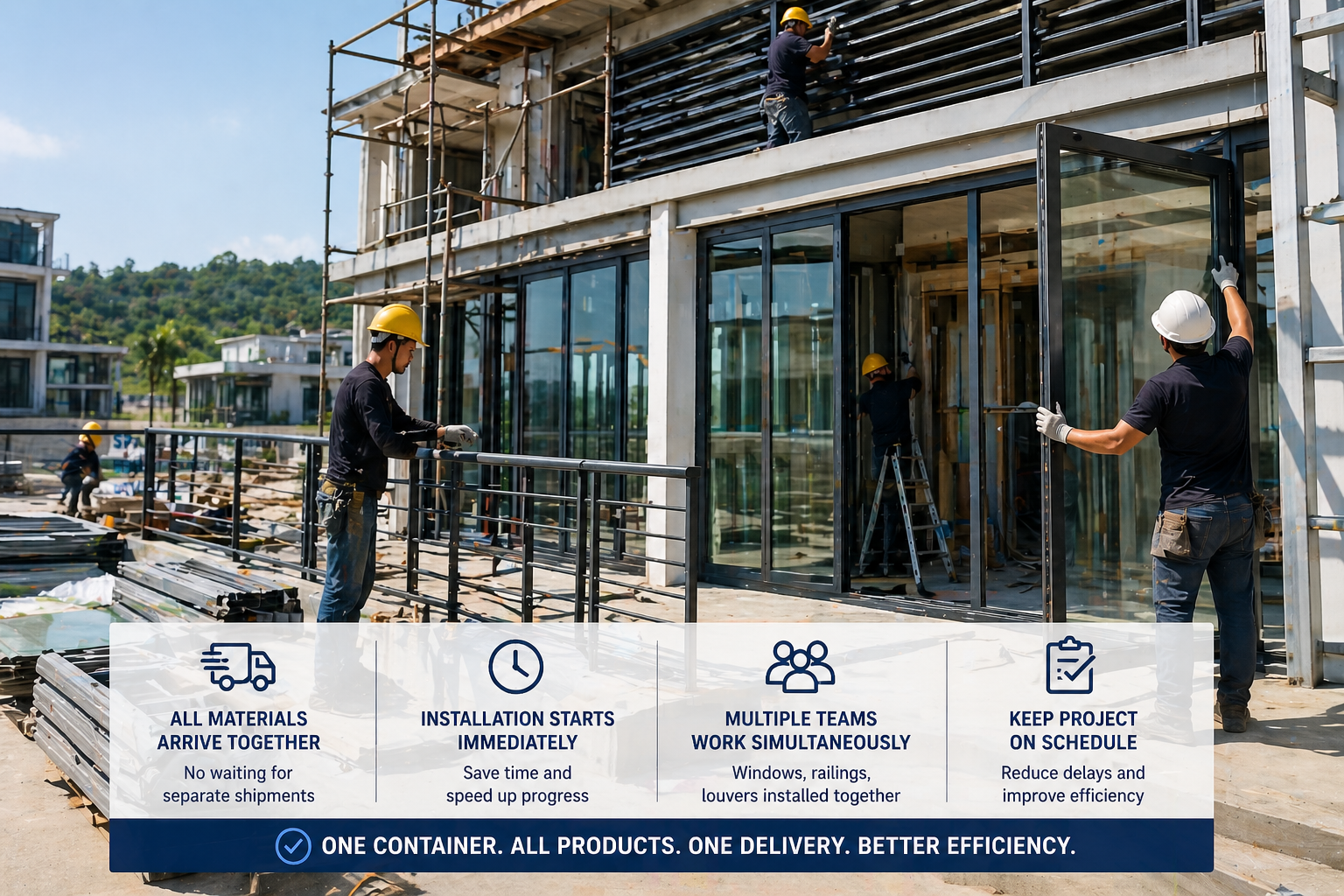
Working with one supplier for multiple systems ensures better coordination, consistent quality, and optimized container loading.
Simplified communication
Consistent product quality
Better project control
Mixed loading requires higher expertise due to the complexity of different materials and product types.
Glass: fragile
Aluminum: scratch-sensitive
Hardware: easy to lose
Long profiles
Flat panels
Small accessories
Improper distribution may cause cargo shifting or damage.
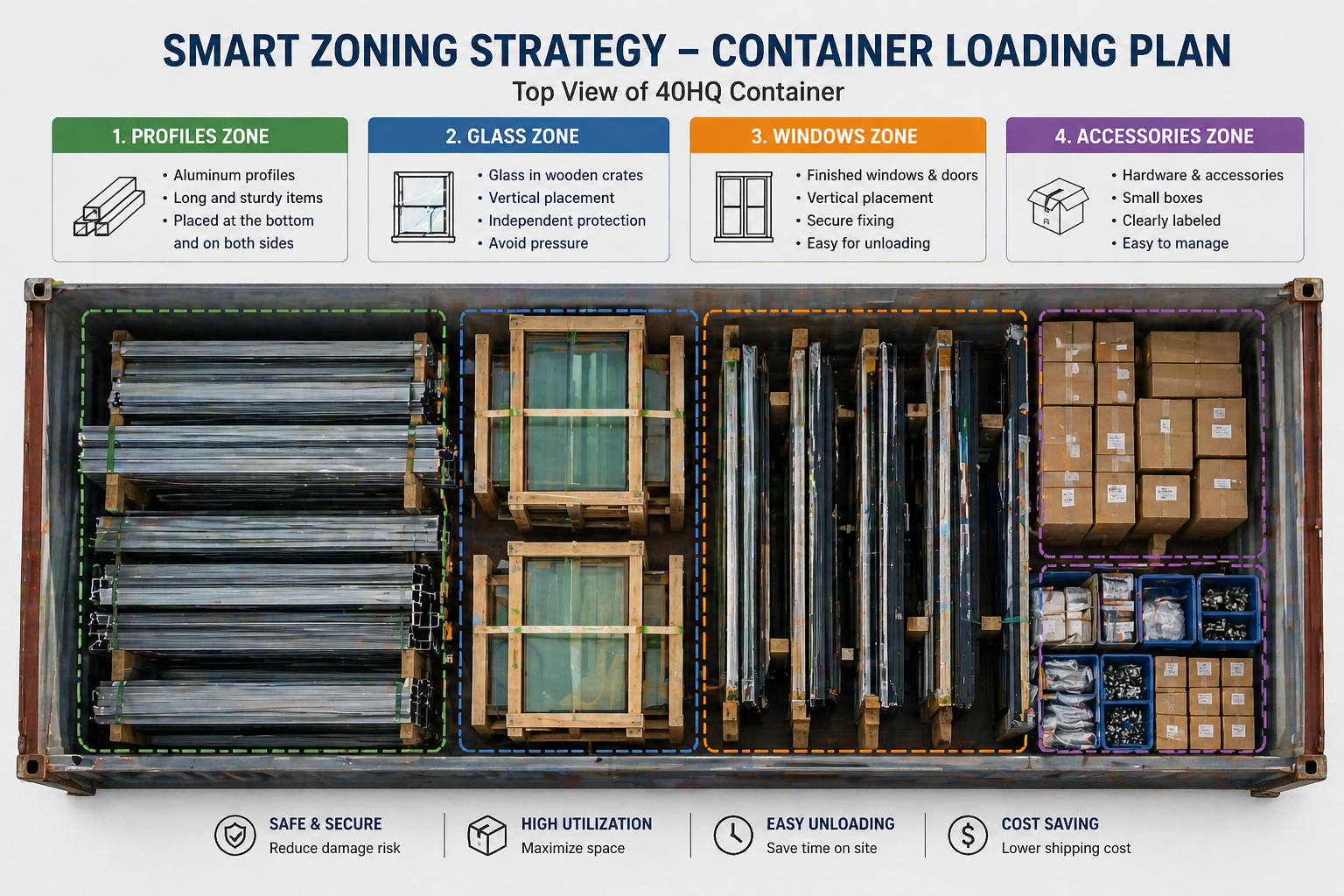
A professional mixed loading plan always uses zoning to ensure safety and efficiency.
Aluminum profiles
Frames
? Positioned at bottom or sides
Wooden crates
Vertical placement
? Independent protection
Small boxes
Clearly labeled
Flexible items
Cartons
? Improve space utilization
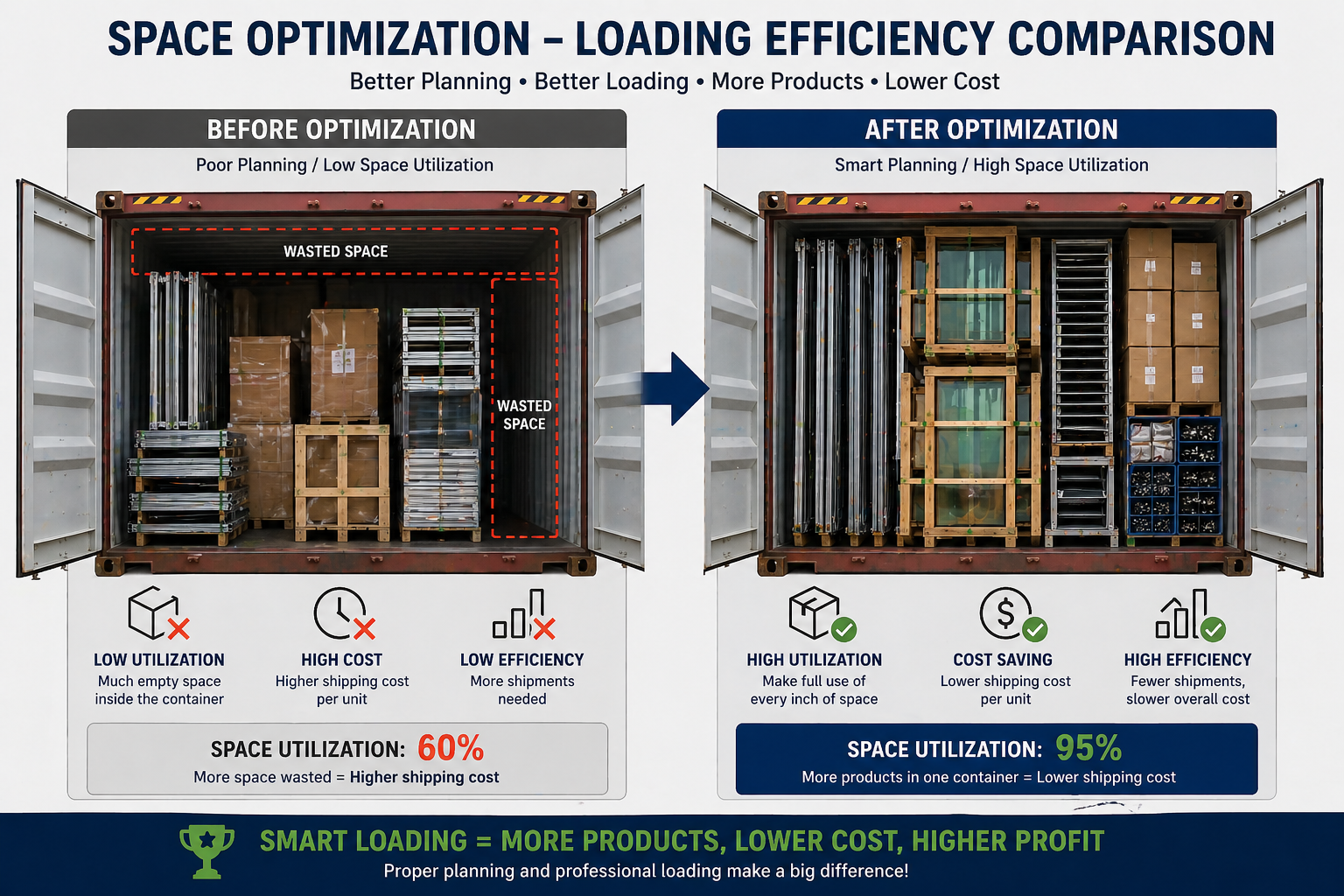
Efficient loading can improve container utilization by more than 20%.
Layered loading
Interlocking layout
Vertical and horizontal combination
The goal of mixed container loading is not just filling the container, but minimizing unit logistics cost.
Total Shipping Cost ÷ Total Product Value = Unit Logistics Cost
Increase loading efficiency
Reduce partial shipments
Avoid urgent air shipments
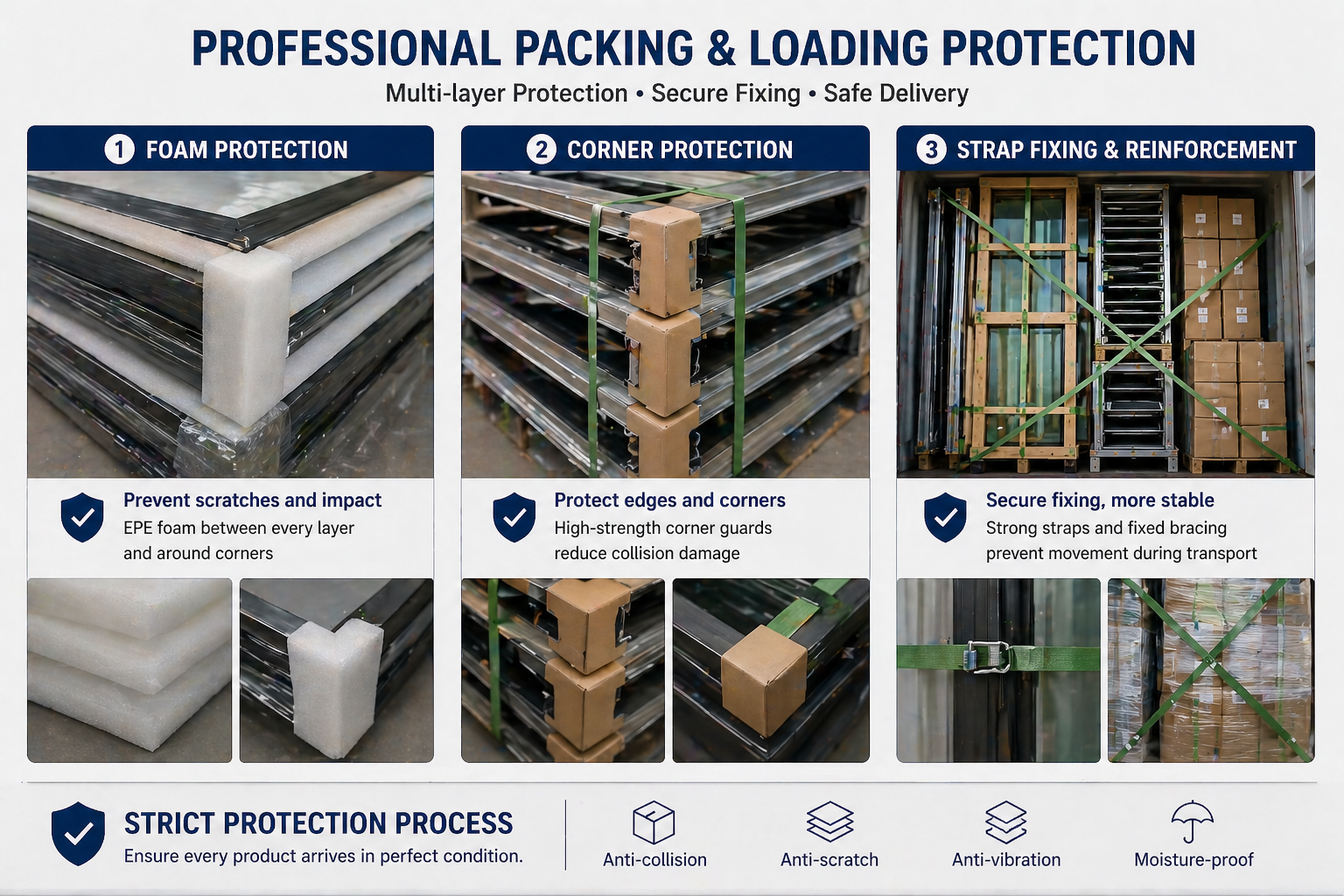
Mixed loading requires enhanced protection measures to avoid damage during transportation.
Material separation
Foam protection
Secure fixing
? Metal must not directly contact glass
Proper loading sequence improves unloading efficiency on site.
Last installed → loaded first
First installed → loaded last
Products: Windows + Railing + Louvers
Container: 1 × 40HQ
28% cost saving(节省28%成本)
Zero damage(零损坏)
Faster installation(更快施工)
Even with a good plan, mistakes in container loading can still happen.
Avoid These Mistakes :
Mixing materials without separation
Overloading one side of the container
Ignoring glass protection
Poor labeling and documentation
? Avoiding these mistakes can significantly reduce damage risk.
Reduce logistics expenses
Shorter lead time
缩短交期
Simplified sourcing
采购更简单
Improved coordination
Q: Can windows, railings, and louvers be shipped together?
Yes, with proper planning.
Q: Will mixed loading increase risk?
No, if professionally handled.
Q: How much cost can be saved?
Typically 15–35%.
Q: What is the best way to load different building materials in one container?
Using a zoning strategy and professional packing ensures safety and efficiency.
Container loading is not just a logistics step — it is a critical part of product delivery quality.
A professional loading process ensures that products arrive safely, reduces unexpected costs, and improves customer satisfaction.
For international construction projects, this level of reliability is essential.
Mixed container loading is not just a logistics solution — it is a strategic advantage for modern construction projects.
By combining multiple product systems into one container, you can significantly improve efficiency, reduce cost, and enhance overall project success.
FOSHAN NANHAI YUEXING HARDWARE PRODUCTS.,LTD
Founded in 1992, Yuexing Hardware specializes in architectural hardware.
1.Main Products:Stair handrails, balcony fences, bathroom glass clamps and curtain wall hardware accessories.
2.Strengths:Reliable, cost-effective hardware solutions backed by a mature local supply chain.
